 wechat
 request sample
 home
home
contact
0769-83699986
135-3754-4550(mr. zhu)

consumer electronics (such as smartphones, tablets, laptops, etc.) have compact internal space and dense devices, and the demand for thermal conductive materials is focused on efficient heat conduction, thinness, insulation, and adaptation to complex structures. the following are the application schemes and case studies of thermal conductive materials for different scenarios:
1. vr glasses/headset (virtual reality headset)
core thermal conductive material types and applicable scenarios
1. high thermal conductivity gel
application scenario: heat conduction between high-heat chips such as cpus and gpus and heat sinks.
characteristics: one component does not need to be cured, low volatility, high stability, can fill the micro gap between the chip and the heat dissipation module (such as 0.3-0.5mm), does not dry crack or spill for long-term use, and adapts to the frequent movement scenarios of vr glasses.
advantages: high heat dissipation efficiency with alloy shell integration or fan forced heat dissipation, high thermal conductivity gel fills the gap, suitable for high-power consumption scenarios, and reduces thermal resistance.
2. high thermal conductivity silicone sheet
application scenarios: heat dissipation in large heating areas such as battery packs and display backplates.
characteristics: the thermal conductivity can reach 12.0w/m·k, the texture is soft and elastic, with self-adhesive and high compressibility, which can fill the uneven interface and reduce thermal resistance. it supports customized size and thickness, and adapts to the complex structural design of vr headsets.
3. advantages: air-cooled active heat dissipation passive heat dissipation material combination, using air-cooled (dual fans flat copper tubes) passive heat dissipation combined with heat conduction materials (high thermal conductivity silicone sheets) to avoid overheating and energy consumption problems of active heat dissipation devices.
3. graphite heat dissipation film/graphene film
characteristics: horizontal thermal conductivity 300-1900w/(m·k), vertical direction only 5-20w/(m·k), suitable for two-dimensional plane vaporization. graphene: theoretical thermal conductivity is 5300w/(m·k), but the production capacity is low and the price is high.
applicable scenarios: ar/vr glasses optical module heat dissipation, shell heat equalization, local hot spot diffusion. it is especially suitable for consumer-grade products with high requirements for thinness and lightness.
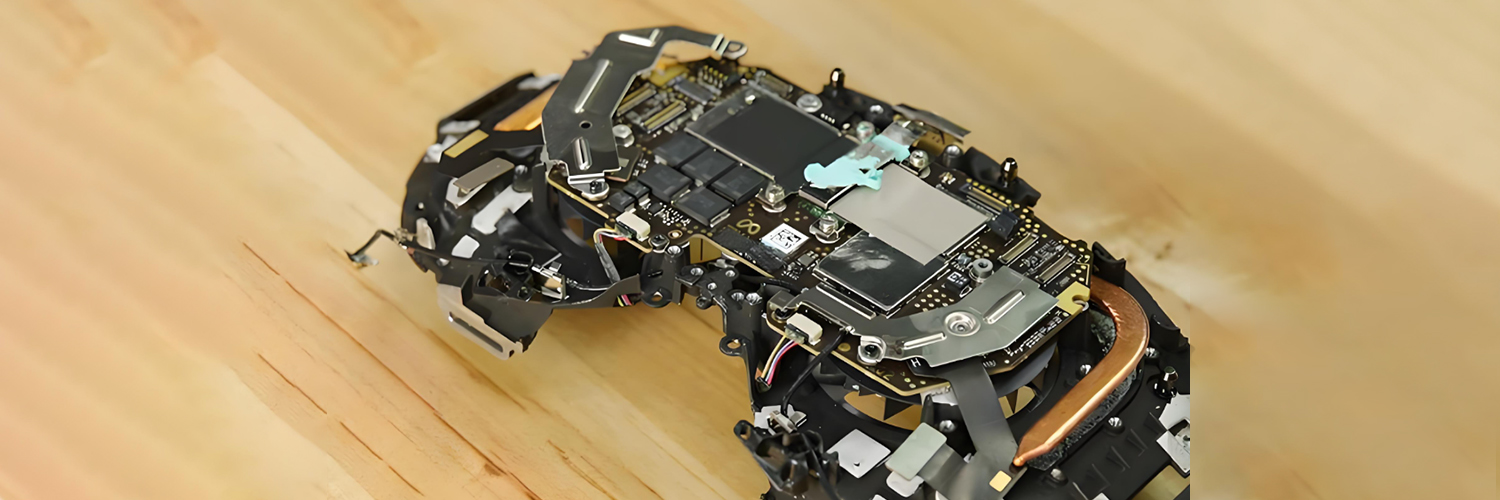
(thermal conductive gel is used in high-heat areas of vr headsets)
2. laptops
application parts: processors, gpus, filling the gaps between chips and heat sinks, between motherboard heating components (such as power management chips, flash memory chips) and metal middle frames, between the back of the display and the housing.
requirements: fill the small gap between the processor, motherboard heating element and heat sink (usually < 0.1mm) to reduce contact thermal resistance and improve heat dissipation efficiency.
recommended materials:
thermally conductive silicone grease/thermal conductive gel: thermal conductivity 1~10 w/m·k, low cost, suitable for high-power chips such as cpus and gpus. for example, desktop computer cpus commonly use thermal grease/thermal gel to fill the heatsink gap.
graphite heat dissipation film: horizontal thermal conductivity up to 1500 w/m·k, thickness only 0.025-0.07mm, suitable for smartphones and tablets.
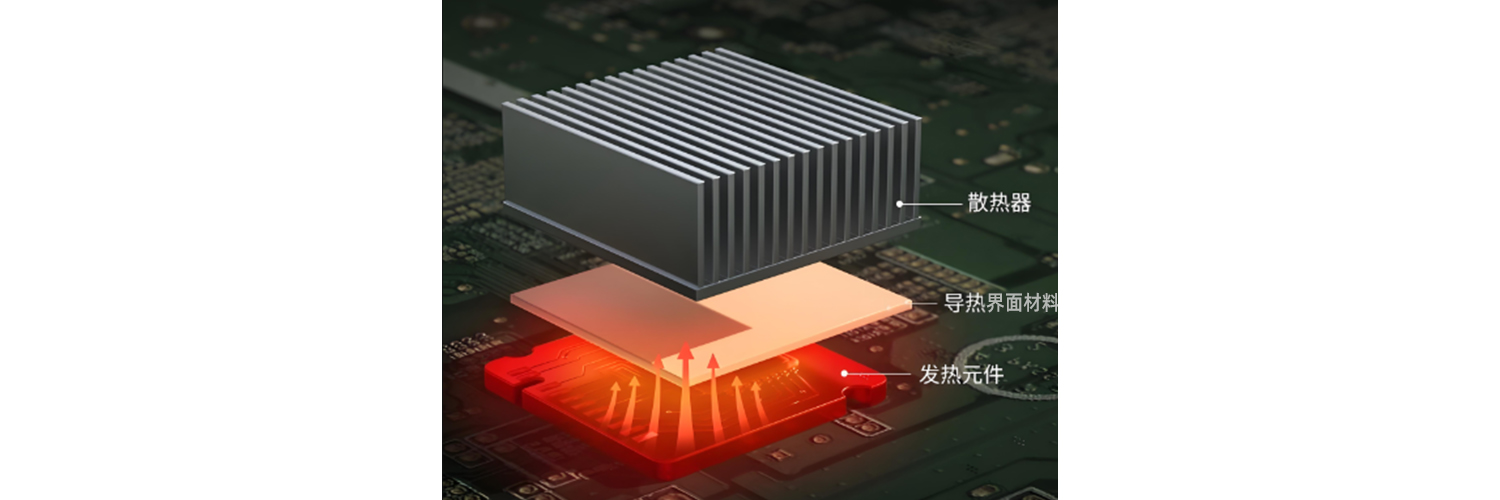
(between the thermal conductive silicone grease filling chip and the heat sink)
3. smart tv
application parts: motherboard cpu/gpu, power strip, backlight module.
1. motherboard cpu/gpu heat dissipation
requirements: high-power chips need to quickly export heat and control temperature rise (cpu surface temperature ≤75°c at room temperature 25°c, ≤90°c at high temperature 40°c).
recommended materials:
thermal conductive silicone grease: thermal resistance 0.05°c·in²/w, filling the gap between the chip and the heat sink, suitable for mainstream tv models.
thermally conductive gel: suitable for small gap assembly, long-term high temperature does not harden, suitable for high-end oled tvs.
graphene heat dissipation substrate: the graphene graphite composite material developed by rare conductor has excellent anti-emi properties and solves the problem of metal heat sinks interfering with peripheral components.
2. power board heat dissipation
requirements: reduce costs while maintaining heat dissipation performance to adapt to thin and light designs.
recommended materials:
graphene heat dissipation coating bare aluminum extrusion: replace the traditional heavy aluminum extrusion radiator, reduce the cost by 10-20%, and reduce the weight by 30%.
thermally conductive silicone sheet: with self-adhesive, high compressibility, fill the gap between the power transformer and the metal frame.
3. backlight module heat dissipation
requirements: led backlight controls temperature rise under high brightness to extend life.
recommended materials:
thermally conductive gel: apply between the backlit display module and the heat sink or metal backplate, suitable for ultra-thin models.
high thermal conductivity graphite film: in-plane thermal conductivity 1500 w/m·k, covering the backlight plate.
4. smart watches
1. chip heat dissipation
requirements: smart watch chips are small in size and high in power density, requiring rapid heat export to avoid performance degradation or component damage.
recommended materials:
thermal conductivity gel: the thermal conductivity is usually higher than 5.0 w/m·k, no flow, no settlement, and extremely low compression reaction, which is suitable for filling the gap between the chip and the heat sink or shell. its automated dispensing feature reduces labor costs and is suitable for large-scale production.
two-dimensional boron nitride heat dissipation film: the thickness can be compressed to 30μm, the thermal conductivity can reach 300-600 w/m·k (2-4 times that of traditional graphite film), and has high insulation (resistivity > 10¹⁴ ω·cm), suitable for 5g rf chips, high-performance processors and other scenarios.
2. battery heat dissipation
requirements: batteries are prone to heating during fast charging or high-load operation, and it is necessary to prevent heat accumulation from shortening life or safety hazards.
recommended materials:
high-elastic super-flexible thermal gasket: it can fully fill the small gap between the pcb board and the battery compartment, with a thermal conductivity of 1.5-3.0 w/m·k, and has insulation (withstand voltage >5kv/mm) to avoid the risk of battery short circuit.
graphene thermal conductive film: in-plane thermal conductivity of 1500-1800 w/m·k, thin and flexible texture, can wrap the surface of the battery to achieve uniform heat dissipation.
3. built-in sensor or electronic component area module seal protection
requirements: modules with built-in sensors or electronic components need to operate stably in complex environments for a long time, and need to be protected by sealing to maintain long-term stability.
silicone potting compound: thermal conductivity 0.6-3.0 w/m·k, temperature resistance -60°c to 200°c, good flexibility (vibration resistance), good wave transmission (suitable for millimeter-wave radar), to avoid local overheating caused by the sealing material.
specific application scenarios | thermal management scheme material application | applied part analysis |
vr glasses/headsets | high thermal conductivity gel, high thermal conductivity silicone sheet, graphite heat dissipation film/graphene film | between the cpu, gpu and other high-heat chips and heat sinks heat |
laptop | thermally conductive silicone grease, thermally conductive gel, graphite heat dissipation film | it is applied to the processor and gpu, filling the chip and heat sink fill the gap between the motherboard's heating components (e.g., power management chips, flash memory chips) and the metal middle frame graphite sheets are attached to the back of the display, taking into account heat dissipation and thin and light design |
smart tv | thermally conductive silicone grease, thermally conductive gel, graphene heat dissipation substrate | fill the air gap between the main control chip and the heat sink or metal base high heat source areas for components (such as mos tubes) in power strips backlight display module (including light bar and cof soft row ic) and heat sink or metal backplate
|
smartwatches | thermal conductive gel, high-elastic ultra-flexible thermal conductive gasket, silicone potting compound, two-dimensional boron nitride heat dissipation film | the chip and motherboard area is filled between the heatsink or metal base the battery area assists in battery heat dissipation and prevents thermal runaway accidents built-in sensor or electronic component area module seal protection |
prev:robot thermal management solution
next:thermal management plan for communication network equipment







contact
0769-83699986
135-3754-4550(mr. zhu)

business

business 1

business 2

business 3

technology