 wechat
 request sample
 home
home
contact
0769-83699986
135-3754-4550(mr. zhu)

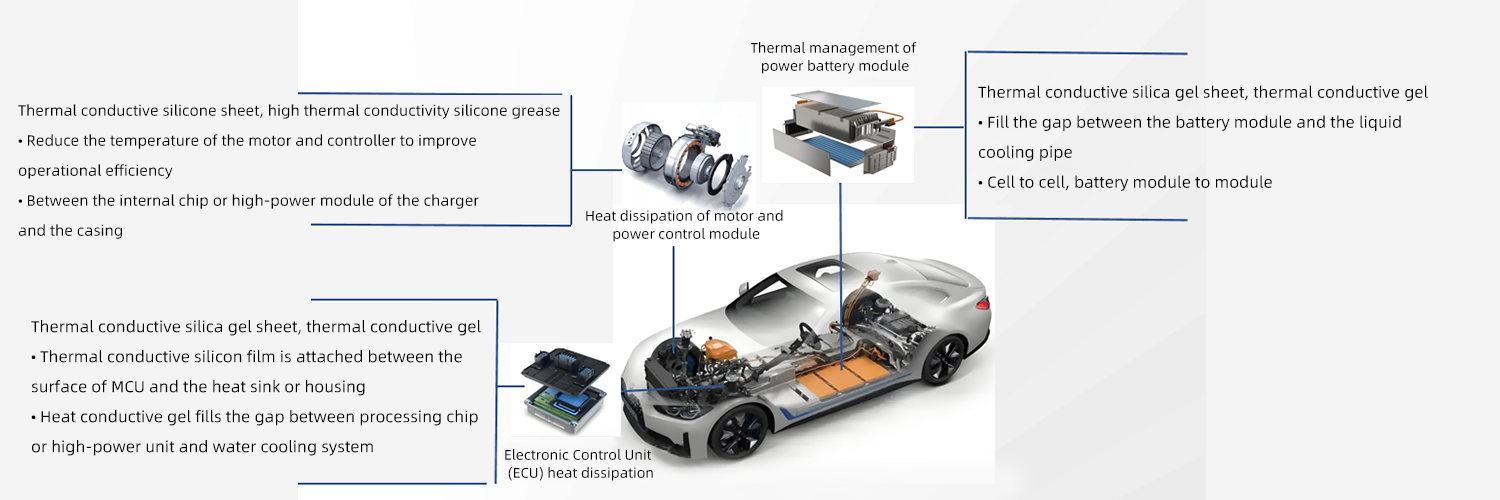
in automotive electronic components, the application of thermal conductive materials needs to be designed based on component characteristics, heat dissipation requirements and working environment, and the following are specific application schemes and analysis:
core thermal conductive material types and applicable scenarios
1. thermally conductive silicone sheet
characteristics: soft and elastic, thermal conductivity 1~12w/mk, thickness 0.5~5.0mm, fire resistance ul94-v0, insulation thermal conductivity, suitable for low-pressure application environment.
application scenarios:
battery pack: fill the gap between the cells, improve heat conduction efficiency, and enhance battery life; at the same time, it has insulation properties to prevent strong voltage from damaging the battery system.
motor controller (mcu): fills the gap on the surface, reduces thermal resistance, improves heat dissipation efficiency, and ensures the stability of motor operation.
battery management system (bms): quickly conducts heat to the heat sink to prevent performance degradation or safety incidents due to overheating.
2. thermal conductive gel
characteristics: low oil output, low volatility, thermal conductivity 1-12w/mk, working temperature -45°c to 200°c, single/two-component matching, can be selected according to the actual application situation, thermal conductivity, heat pipe structure, etc. the thermal conductive gel ensures close contact with electronic components through excellent caulking performance, preventing pollution or damage to components due to oil or volatilization.
application scenarios:
battery module and water cooling system: fill small gaps to ensure smooth heat transfer to the cooling system, improving the efficiency of vehicle thermal management.
electronic modules such as battery management system (bms) controllers: adapt to complex surface structures, achieve efficient heat dissipation, and ensure the stable operation of electronic components.
3. thermally conductive potting adhesive
characteristics: meet the performance requirements of high thermal conductivity, excellent electrical insulation, high and low temperature resistance, shock and dust resistance, environmental protection, and compliance with industry certification standards. adapt to extreme working environments (such as -50°c to 180°c) to ensure the stability of charging equipment, sensors and other components.
application scenarios:
charging pile: fill the gap between the components through the fluidity of the potting compound, and form a full protective layer after curing to ensure the normal operation of the equipment in bad weather.
automotive sensors: temperature sensors, position sensors, power battery sensors and other sensors are encapsulated and protected by potting compound, which not only meets their operating needs such as waterproof, shockproof, dustproof, and anti-corrosion, but also prevents local thermal runaway or short circuit of the internal circuit and prolongs the service life.
2. heat dissipation scheme of key components
1. power battery module
solution: liquid cooling heat dissipation (heat dissipation aluminum tube coolant) thermal conductive silicone sheet/thermal gel to assist heat transfer
advantages: s-shaped layout condenser tube wraps the battery module, thermally conductive silicone sheet/thermal gel fills the gap, and the heat of the power battery is conducted to the gel tube through the heat conduction filling interface material to achieve efficient heat dissipation. the use of low-density and lightweight thermally conductive silicone sheet between the battery cell and the battery module and the module can realize heat conduction and vibration and flame retardant between modules.
2. motor controller (mcu)
solution: water cooling heat dissipation thermal conductive silicone sheet/thermal gel filling gap
advantages: the thermally conductive silicone sheet adheres to the surface of the mcu to reduce thermal resistance; the thermal conductive gel fills the gap of the water cooling system to strengthen heat dissipation and ensure the efficient operation of the motor. the electric bus motor controller adopts a thermal gasket with high thermal conductivity, with a breakdown voltage greater than 5kv/mm and high tear resistance to meet the needs of long-term vibration applications.

(mcu electronic control unit and heat sink or housing thermal conductive caulk)
3. battery management system (bms)
solution: aluminum shell heat dissipation thermal conductive silicone sheet/thermal gel conducts heat
advantages: thermally conductive silicone sheets quickly conduct heat to the heat sink, and the thermal gel adapts to complex surface structures to ensure the stable operation of bms. the surface of the bms is attached to a thermally conductive silicone sheet, and the ultra-soft material reduces structural stress and plays a cushioning and protective role.
4. charging pile
solution: high thermal conductivity insulation materials (thermal conductivity gasket, thermal conductive silicone grease) thermal conductive potting compound waterproof and dustproof
advantages: the thermal gasket conducts heat from the inductor module to the metal heat dissipation parts, the thermal grease fills the gap between the chip and the heat sink, and the potting compound improves the safety of the power module. the charging pile inductor module adopts thermal conductivity gasket to quickly conduct heat and absorb shock; the power module uses potting compound to improve thermal conductivity and achieve waterproof and dustproof performance.
specific application scenarios | thermal management scheme material application | applied part analysis |
power battery module | thermally conductive silicone sheet, thermally conductive gel | fill the gap |
motor controllers (mcus) | thermally conductive silicone sheet, thermally conductive gel | thermally conductive silicone sheets are applied to the surface of the mcu and the heat sink or housing |
battery management system (bms) | thermally conductive silicone sheet, thermally conductive gel | the surface of the bms high-power area is attached to the surface of the thermal conductive silicone sheet |
charging piles, various sensors | thermally conductive silicone sheet, thermally conductive gel, thermally conductive potting compound | the thermal gasket conducts heat from the inductor module to the metal heat dissipation part thermal potting compound ensures the safety of power modules and various sensors such as waterproof, dustproof, flame retardant, etc |
prev:robot thermal management solution
next:







contact
0769-83699986
135-3754-4550(mr. zhu)

business

business 1

business 2

business 3

technology