 wechat
 request sample
 home
home
contact
0769-83699986
135-3754-4550(mr. zhu)

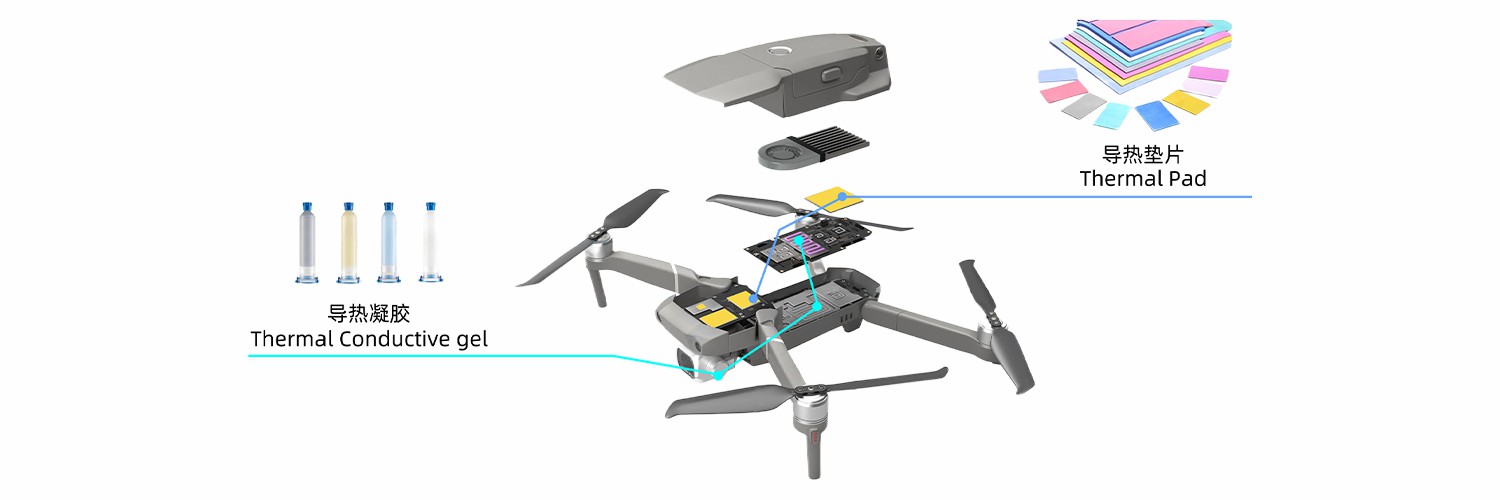
application scheme of thermal conductive materials for aviation aircraft
the demand for thermal conductive materials for aviation aircraft focuses on efficient heat dissipation, light weight, structural adaptability, extreme environmental stability, and long-term reliability. the following solutions combine practical experience with spacecraft and low-altitude vehicles (e.g. drones) to propose targeted solutions for different components:
1. core power and energy system heat dissipation: high thermal conductivity and heat conduction materials
applicable scenarios: high-power components such as battery packs and motor controllers (esc).
technical principle:
metal materials: aluminum and aluminum alloys are widely used in spacecraft structural parts (such as aluminum honeycomb panels) and heat dissipation frames due to their low density (2.7g/cm³), high thermal conductivity (200-230w/m·k) and good processability. copper has a higher thermal conductivity (398w/m·k) but a higher density (8.96g/cm³), making it suitable for local hot spots or space-constrained scenarios (such as antenna tr module heat dissipation).
high thermal conductivity gel: through the composite of silicone resin substrate and alumina filler, the 0.3~3mm gap adaptive filling is realized, and the thermal conductivity reaches 3-12w/m·k. its paste-like characteristics can completely cover the small gaps between the chip and the heat dissipation frame, reducing thermal resistance to less than 0.05°c·cm²/w.
advantage:
efficient thermal conductivity: the combination of extruded metal and highly conductive gel can cover the needs of rapid heat dissipation in high-heat source environments.
structural reinforcement: aluminum honeycomb panels and other designs integrate load-bearing and heat dissipation functions, reducing the number of components.
process compatibility: high thermal conductivity gels automate dispensing, making them suitable for large-scale production.
2. heat dissipation of electronic equipment and control system: thermal conductive interface materials (tims) and flexible solutions
applicable scenarios: motherboard chips, remote controls and other precision electronic components.
technical principle:
thermal conductive gel/silicone grease: fill the gap between the chip and the heat sink, with a thermal conductivity of 1-12w/m·k, and adapt to a tolerance environment of 0.1-5mm. for example, the uav esc motherboard chip realizes heat conduction through the path of "chip-thermal gel-shield-thermal conductive gel-shell", and the thermal resistance < 0.1°c·cm²/w.
thermally conductive silicone sheet: provides insulation and shock absorption functions, thermal conductivity 1-5w/m·k, suitable for remote control modules and other dynamic components.
advantage:
process compatibility: thermally conductive gels/greases can be automated for dispensing, making them suitable for large-scale production.
dynamic adaptability: thermally conductive silicone sheets can be bent, cut, and adapted to complex mechanical structures.
electromagnetic shielding: thermally conductive silicone sheets can also have electromagnetic shielding functions, reducing system complexity.
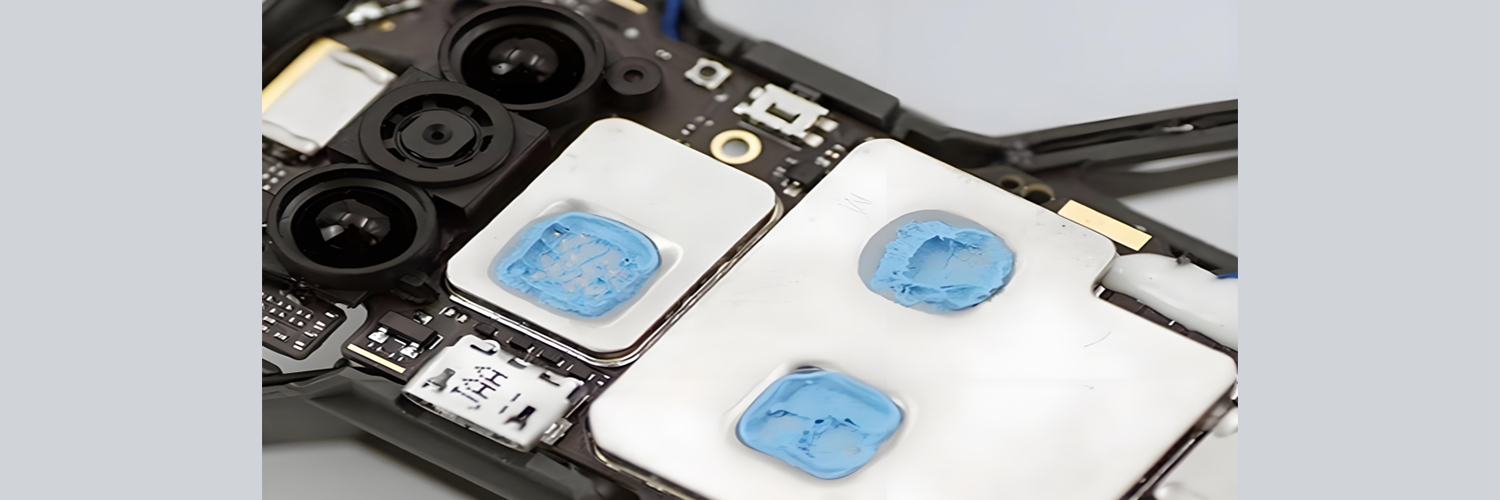
(thermal gel fills the gap between the chip and the heat sink)
3. special environmental adaptability plan
1. extreme temperature environments (-55°c to 150°c)
thermal conductive gel modification: through silicone resin substrate modification, zero-stress bonding under extreme working conditions from -55°c to 150°c can be achieved to avoid material shedding caused by thermal expansion and contraction.
phase change material (pcm): paraffin-based composite pcm latent heat absorption capacity reaches 200-300kj/kg, which can inhibit temperature sudden rise by 30%, and is suitable for spacecraft day and night temperature difference scenarios.
2. moisture protection and insulation needs
thermally conductive silicone sheet: it has moisture-proof and insulating properties (breakdown voltage >10kv/mm), suitable for outdoor drones or humid environments.
thermally conductive potting compound: through epoxy resin and thermally conductive filler compound, ip67 waterproof is achieved, and the thermal conductivity is up to 1.5-3.0w/m·k.
specific application scenarios | thermal management scheme material application | thermal management solution advantages |
high-power components such as battery packs and motor controllers (esc). | metal heat dissipation structure high thermal conductivity gel | the efficient thermal |
motherboard chips, remote controls and other precision electronic components | thermally conductive gel/silicone grease thermally conductive silicone sheet flexible graphite film | process compatibility |
special environmental adaptation program | modified thermal conductive gel phase change material (pcm) thermally conductive silicone sheet thermal conductive potting compound | high reliability |







contact
0769-83699986
135-3754-4550(mr. zhu)

business

business 1

business 2

business 3

technology